


As the Nigeria Democratic Congress (NDC) ramps up preparations for the 2027 general elections, former Anambra State governor and presidential hopeful, Peter Obi, has held high-level talks with South African government officials over growing concerns about immigration and rising tensions affecting Nigerians living in the country.
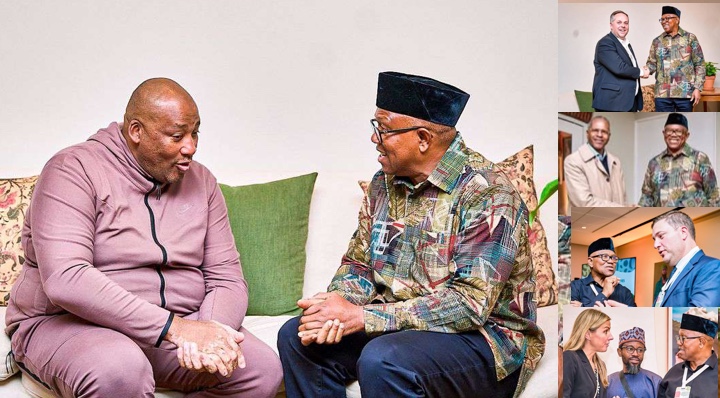
Obi, who is currently in South Africa for an international conference, engaged with senior officials including the Minister of Home Affairs, Leon Schreiber; Minister of Cooperative Governance and Traditional Affairs, Velenkosini Hlabisa; and Minister of Sports, Arts and Culture, Gayton McKenzie. Discussions focused on migration challenges, youth unemployment, security issues, and increasing friction involving African migrants.
Following complaints from Nigerian nationals in South Africa about hostility and immigration-related disputes, Obi called for stronger bilateral cooperation between both countries. He emphasized that solutions must be based on justice, mutual respect, dialogue, and adherence to the rule of law. He also urged citizens on both sides to avoid violence, hate speech, and provocation, stressing the importance of resolving grievances through lawful channels.
In the midst of political speculation ahead of the 2027 elections, Obi also dismissed claims that he was avoiding former Vice President Atiku Abubakar. Speaking at the Spier Dialogue 2026 in Cape Town, he described Atiku as a close associate and respected political figure, insisting there was no rift between them.
“There are very few human beings who are as close as I am to Atiku… I don’t run from him,” Obi said, adding that his political decisions are guided by principle rather than personal disagreements.
Obi and Atiku had previously aligned under the African Democratic Congress (ADC) coalition aimed at challenging President Bola Tinubu in 2027. However, Obi has since exited the coalition, stating that his departure was not driven by personal conflict with Atiku or former Senate President David Mark.
On economic matters, Obi also drew a contrast between lending systems in the United Kingdom and Nigeria. Recalling his experience while doing business in the UK, he noted that British banks granted him access to loans based on trust and intellectual credibility.
“They didn’t ask me about my parents… they gave me this loan based on my intellectual capital, and I paid them back,” he said.
He contrasted this with Nigeria’s banking system, which he described as heavily dependent on collateral, arguing that such practices limit opportunities for capable but asset-poor entrepreneurs.