
Home Blog Page 15

Ifako-Ijaiye Renewed Hope Ambassadors Rally Support for Tinubu, Showcases Reform Gains

Stakeholders in Ifako-Ijaiye, Lagos, back President Tinubu’s Renewed Hope agenda, citing economic reforms, infrastructure projects and social programmes ahead of 2027 elections

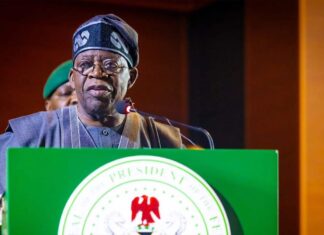
President Bola Ahmed Tinubu

Ifako-Ijaiye Stakeholders Endorse Tinubu, Highlight Economic Reforms and 2027 Agenda

The Ifako-Ijaiye Renewed Hope Ambassadors on Wednesday convened a high-level advocacy and stakeholders’ engagement in Lagos, rallying support for the reform-driven agenda of Bola Ahmed Tinubu while making a strong case for continuity ahead of the 2027 elections.

Held at Unity Centre along Iju-Ajuwon Road in Ifako-Ijaiye, the event brought together religious leaders, community groups, market associations, youth representatives, transport unions and professionals in a broad-based dialogue on the administration’s economic and governance reforms. Convener of the forum and local coordinator of the group, Hon. Olurotimi Adeleye, said the engagement was designed to connect policy with people, deepen grassroots understanding of reforms and consolidate public backing for ongoing national initiatives.

Speakers at the gathering highlighted key pillars of the Renewed Hope agenda, pointing to the removal of fuel subsidy as a decisive move that has redirected trillions of naira into infrastructure, healthcare and social support programmes. They also underscored the unification of exchange rates as a step toward transparency and investor confidence, alongside revenue reforms that have lifted non-oil earnings beyond ₦20 trillion by mid-2025 and improved the tax-to-GDP ratio. Participants noted that tighter debt management has significantly reduced the country’s debt service burden, freeing fiscal space for development projects, while Central Bank reforms have curtailed inflationary financing and cleared billions of dollars in foreign exchange backlogs.

The administration’s infrastructure drive also featured prominently, with references to flagship projects such as the Lagos-Calabar Coastal Highway and the Sokoto-Badagry Superhighway, as well as the decentralisation of electricity under the Electricity Act 2023, enabling states and private players to participate in power generation and distribution. Social interventions including the student loan scheme, a new ₦70,000 minimum wage, expanded consumer credit access and targeted cash transfers to millions of vulnerable households were cited as evidence of efforts to cushion the impact of reforms and rebuild the middle class.

Security and governance reforms were equally emphasised, with speakers noting enhanced military capacity, ongoing anti-corruption efforts and renewed focus on local government autonomy as critical steps toward strengthening institutions and improving service delivery.

In a keynote address delivered on behalf of Lagos State coordinator Tayo Akinmade Ayinde, Miss Adetutu Abraham-Adesanya said the engagement underscored the administration’s commitment to inclusive development. “We are here with a clear message: the Renewed Hope agenda is not just a policy framework but a promise that development must be felt in every community,” she said. “This platform allows us to listen, engage and ensure that governance reflects the aspirations of the people.”

The traditional ruler of Ojokoro land, Oba Riliwan Oluwalambe Taiwo, commended the administration’s reforms, describing them as impactful across multiple sectors. He urged residents to sustain their support, arguing that continuity would be critical to consolidating gains already recorded. “For Nigeria to maintain its current trajectory of progress, it is essential that citizens remain committed to leadership that prioritises reform and development,” he said.

Participants repeatedly called on Lagos residents, particularly those in Ifako-Ijaiye, to rally behind the President’s re-election bid in 2027, framing it as a referendum on the sustainability of ongoing reforms.

In his closing remarks, Adeleye expressed gratitude to attendees and reaffirmed the group’s commitment to grassroots mobilisation. “The strength of this movement lies in the people. Your presence here today reflects a shared belief in a better Nigeria and a collective resolve to support policies that deliver real change,” he said. “Together, we are not only advancing the Renewed Hope vision but also laying the foundation for lasting progress, unity and accountable governance.”

He added that the engagement marked another step in building nationwide consensus around reforms aimed at stabilising the economy, expanding opportunities and strengthening democratic institutions.

Fubara Pushes Bold Innovation Drive to Fix Nigeria’s Housing Crisis

0

Rivers State Governor, Siminalayi Fubara, has called for bold and innovative approaches to tackle Nigeria’s persistent housing deficit, positioning the real estate sector as a critical driver of economic growth and social development.

Speaking at the BusinessDay South-South Real Estate Exhibition and Investment Summit 2026 in Port Harcourt, the governor said the housing sector holds vast potential not only for investment but also for job creation and improved living standards.

Represented by the Secretary to the State Government, Dr. Dagogo Wokoma, Fubara reaffirmed his administration’s commitment to working closely with stakeholders and innovators to close the housing gap and transform urban development across Rivers State.

The summit, themed “Addressing Nigeria’s Housing Deficit with Innovative Solutions,” brought together industry leaders, policymakers, and investors to explore practical pathways for sustainable housing delivery.

Fubara stressed that real estate remains a powerful engine for urban transformation and wealth creation globally, noting that Rivers State is positioning itself to harness these opportunities through strategic reforms.

“Our administration is committed to creating an enabling environment for investors and stakeholders in the real estate ecosystem through policy reforms, infrastructure development, and stronger public-private partnerships,” he said.

He urged participants to leverage the platform to exchange ideas, forge partnerships, and contribute innovative solutions capable of reshaping the future of housing development in the state and across Nigeria.

In her remarks, the Minister of Housing and Urban Development, represented by Federal Head of Lands, Queen Tekai, said the federal government is actively implementing measures to create a more supportive environment for housing development nationwide.

Delivering the keynote address, Group Managing Director of TAF Africa Global and Managing Director of Greater TAF Nigeria Ltd, Mustapha Njie, emphasised the need for a forward-thinking housing sector driven by accessibility and efficiency.

Njie outlined key strategies to bridge the housing gap, including improving access to financing, strengthening public-private partnerships, reducing bureaucratic hurdles, and lowering the high costs associated with land titling.

He also advocated for the development of new cities such as Greater TAF City in Nigeria and TAF City in The Gambia, alongside increased investment in local building materials production.

Highlighting future trends, Njie called for strategic urbanisation, better infrastructure in emerging areas, and the adoption of eco-friendly, smart city concepts to ensure sustainable growth in the housing sector.

Renewed Hope Agenda Under Scrutiny: Tinubu’s Reforms Face Criticism, Evidence Points to Institutional and Economic Gains

0

Recent criticism of Nigeria’s Renewed Hope Agenda by former Interior Minister Rauf Aregbesola has reignited debate over the effectiveness of ongoing reforms under President Bola Ahmed Tinubu. While Aregbesola described the programme as a “scam,” a closer look at institutional and economic developments suggests a more complex reality shaped by measurable policy shifts.

Reform as Measurable Institutional Change

Far from being rhetorical, the Renewed Hope Agenda has produced visible administrative reforms, particularly within the Ministry of Interior under the leadership of Olubunmi Tunji-Ojo.

Key improvements include the clearing of over 200,000 passport application backlogs, digitisation of application systems, and reduced opportunities for bureaucratic inefficiency. Border management systems have also been modernised, while correctional service reforms have focused on decongestion and improved internal security coordination.

These developments represent structural administrative changes rather than political claims, pointing to measurable improvements in public service delivery.

Infrastructure Expansion and National Connectivity

The administration has also accelerated infrastructure delivery across major transport corridors. Strategic projects such as the Lagos–Calabar Coastal Highway and the Sokoto–Badagry corridor are designed to enhance long-term national integration and economic mobility.

In addition, ongoing rehabilitation of key routes—including the Abuja–Kaduna–Kano and Onitsha–Enugu highways—alongside upgrades in the Federal Capital Territory road network, reflects a broader infrastructure renewal strategy.

Economic Stabilisation and Fiscal Adjustments

One of the less visible but significant outcomes of recent reforms is improved fiscal stability across Nigeria’s subnational governments. States that previously relied heavily on federal bailouts are now benefiting from improved revenue inflows, easing pressure on salary obligations and governance spending.

This shift reflects broader macroeconomic adjustments aimed at improving long-term fiscal sustainability, even amid short-term economic pressures.

Macroeconomic and Energy Sector Developments

Since taking office, President Tinubu’s administration has overseen efforts to stabilise foreign reserves and improve oil production output. Energy sector reforms, including debt resolution and investment in transmission and gas infrastructure, are also being implemented to strengthen long-term energy reliability.

These reforms are intended to address structural weaknesses that have historically constrained Nigeria’s economic growth.

Aviation and Public Sector Efficiency

Reforms within the aviation sector, including improvements under the Federal Airports Authority of Nigeria, have contributed to increased operational efficiency and revenue performance. Airport upgrades across major hubs signal a shift toward expanding capacity and aligning with global aviation standards.

The Politics of Reform and Expectations

While critics argue that poverty levels remain high, analysts note that structural reforms typically require time before producing widespread socioeconomic impact. Historical examples from emerging economies suggest that economic transformation is gradual and often uneven in its early stages.

Conclusion

The debate surrounding the Renewed Hope Agenda reflects broader tensions between political expectations and policy timelines. While criticism remains part of democratic discourse, evidence from institutional reforms, infrastructure development, and fiscal adjustments suggests that significant changes are underway.

Ultimately, the key question is not whether reforms exist, but how their outcomes are assessed—and over what timeframe their impact should fairly be judged.

Terrorism Charges Deepen as FG Re-Arraigns Ex-AGF Abubakar Malami, Son in Abuja Court

0

The Federal Government on Wednesday re-arraigned former Attorney-General of the Federation, Abubakar Malami, alongside his son, Abdulaziz Abubakar Malami, on a fresh five-count amended charge bordering on alleged terrorism-related offences and unlawful possession of firearms.

The defendants were arraigned before Justice Joyce Abdulmalik of the Federal High Court, Abuja, as the prosecution formally replaced the earlier charge with an amended one.

At the proceedings, prosecution counsel, Akinlolu Kehinde (SAN), informed the court of the updated charge, noting that it had already been served on the defendants. Defence counsel, Shuaibu Arua (SAN), confirmed receipt and stated that his clients had no objection.

Following the absence of opposition, the court struck out the initial charge and directed that the amended counts be read. Both defendants pleaded not guilty to all charges.

The defence subsequently urged the court to allow the defendants to continue on the bail earlier granted, a request the court approved without objection from the prosecution.

It would be recalled that on February 27, the court admitted both men to bail in the sum of N200 million each, with two sureties in like sum.

Justice Abdulmalik adjourned the matter to May 26 for the commencement of trial, during which the prosecution is expected to present witnesses and tender evidence.

According to the amended charge, the defendants were accused of preparing to commit acts of terrorism in December 2025 at Geeze Phase II area of Birnin Kebbi Local Government Area, Kebbi State, by allegedly possessing a firearm and ammunition without a valid license.

The charges include conspiracy to commit terrorism-related acts, unlawful possession of a Sturm Magnum firearm, and illegal possession of both live and expended ammunition, in violation of provisions of the Terrorism (Prevention and Prohibition) Act, 2022, and the Firearms Act.

The case marks a significant development in ongoing legal proceedings involving the former AGF, drawing national attention as the trial date approaches.

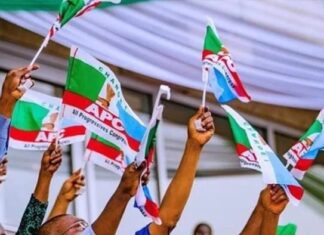
“Buni Defends APC Strategy, Says Party United and Strong Ahead of 2027 Polls”

0

Governor of Yobe State, Mai Mala Buni, has defended the All Progressives Congress (APC)’s internal strategy, saying the ruling party is consolidating its strength and fostering unity ahead of the 2027 general elections.

Buni, who chairs the APC Conflict Resolution, Strategy and Mobilisation Committee, said the body was constituted in response to the massive influx of high-profile defectors into the party, a development he described as both a strength and a management challenge.

He noted that prominent figures such as Dave Umahi, Bello Matawalle, and Ben Ayade, alongside other political heavyweights, have boosted the party’s numerical advantage.

According to him, President Bola Ahmed Tinubu established the committee to manage relationships among new and existing members, resolve internal disputes, and prevent potential conflicts as the party prepares for future elections.

“The committee is designed to address existing and emerging threats while providing proactive solutions to strengthen the party,” Buni said, adding that efforts so far have improved cooperation among previously divided stakeholders.

He pointed to the peaceful conduct of recent ward, local government, state, and zonal congresses, as well as the consensus-driven national convention, as clear signs that reconciliation efforts are yielding results.

Expressing optimism, Buni said the APC is positioning itself as a united front for the 2027 elections, noting that consultations and engagement with stakeholders remain ongoing.

On insecurity, the governor acknowledged the severity of the challenge, particularly in the North-East, where Yobe has been significantly affected by insurgency. He, however, highlighted progress made in restoring stability, including the return of displaced persons and ongoing reconstruction of affected communities.

Buni commended security agencies and local support groups for their sacrifices and urged Nigerians to play active roles by supporting security efforts and sharing credible information.

Reacting to concerns about possible Northern opposition to President Tinubu in 2027, Buni dismissed such claims, attributing them to individual political ambitions rather than a collective regional stance.

He further described Tinubu as a pan-Nigerian leader with a history of supporting politicians across regions, citing his past alliances with figures like Atiku Abubakar and Muhammadu Buhari.

On the economy, Buni admitted that challenges persist but linked them largely to the impact of insecurity, which has forced governments to divert resources toward rebuilding infrastructure destroyed by conflict.

He called on Nigerians to support ongoing reforms by the Tinubu administration, stressing that unity, peace, and collective responsibility remain critical to achieving national stability and economic prosperity.

I Agree With Aregbesola, Renewed Hope Is A Scam | By Olabode Opeseitan

By Olabode OPESEITAN

I Agree With Aregbesola, Renewed Hope Is A Scam

There are moments in a nation’s political theatre when a single statement achieves the rare feat of being both self indicting and historically clarifying. Rauf Aregbesola’s recent declaration at the ADC convention, that after three years President Bola Tinubu is still promising renewed hope, belongs in that category. It is a masterpiece of unintended autobiography, a confession disguised as critique.

After all, this is the same Aregbesola who, upon being appointed Minister of Interior in 2019, told the national press he had no idea what the Ministry of Interior actually did. Not a metaphor. Not a joke. A literal admission of administrative amnesia. And yet, President Muhammadu Buhari left such a character in charge of that ministry for four years.

The results had the predictability and surefootedness of gravity, the kind that does not surprise you when it pulls a stone downward or a ministry into dysfunction:
• Jailbreaks like seasonal festivals
• A demoralised workforce
• A passport system that functioned like a national hazing ritual
• Borders so porous they could have been designed by a conceptual artist exploring the theme of absence

So when Aregbesola now claims that the Renewed Hope Agenda of Asiwaju Bola Ahmed Tinubu is a scam, one must extend compassion. He is speaking from the limits of his own administrative imagination. He cannot see what he never understood.

THE MINISTRY HE LEFT BEHIND, THE MINISTRY HE CANNOT RECOGNISE

As part of the Renewed Hope agenda, President Tinubu appointed a young technocrat, Olubunmi Tunji Ojo, to clean up the ruins Aregbesola and his predecessors left behind. And the record shows that he did not merely clean. He rebuilt.

Key achievements of Olubunmi Tunji Ojo (as widely reported):
• Cleared a passport backlog of over 200,000 applications within weeks, ending years of systemic delays
• Launched automated passport processing, reducing human contact and corruption opportunities
• Upgraded border control systems, including e gates and biometric enhancements
• Reformed the Nigerian Correctional Service, initiating decongestion and modern security protocols
• Strengthened inter agency coordination across immigration, civil defence and correctional services

If Aregbesola cannot see this revolution, blame him not. One cannot fault a man for operating at the coping capacity of his acuity.

OSUN’S DESCENT UNDER HIS WATCH

Aregbesola’s difficulty recognising reform did not begin in Abuja. His eight years as Governor of Osun State left a fiscal footprint that still startles analysts. Before he left office in 2010, Olagunsoye Oyinlola publicly stated that he inherited a debt of 2.5 billion naira and that his administration took an additional loan of 18.3 billion naira, placing Osun’s obligations at a little over 20 billion naira before interest and other charges. By 2017, Osun’s debt stock had risen to 165.91 billion naira according to the state’s own financial disclosures, a level that placed it among the most indebted states in the federation. What is clear from the debt profile without any commensurate developmental strides is that Aregbesola presided over a state whose fiscal health deteriorated sharply. If this was his idea of economic stewardship, one begins to understand why he struggles to recognise reform even when it is happening in front of him.

THE SCAM THAT BUILT ROADS THAT WERE NOT THERE

Aregbesola says Renewed Hope is a scam. And he is right.

All the roads being fixed across Nigeria are a scam. The Lagos Calabar Coastal Highway is a hallucination. A national mirage. The Sokoto Badagry super corridor is a pipe dream conceived by the Shagari administration and apparently still trapped in the astral plane. Any construction workers sweating under the sun along that route are clearly participating in a mass delusion.

To Aregbesola, none of the hundreds of ongoing monumental reconstruction works exist. The Kaduna Abuja Road, Kaduna Zaria Kano Road, the Onitsha Enugu Road, the East West Road and the transformed arteries of Abuja are figments of the collective imagination of Nigerians who insist on seeing asphalt and concrete where only despair should be.

The Ibadan Ilesa Road, which degenerated into a complete state of disrepair while Aregbesola served in government, is now being rebuilt. But since the reconstruction is happening under Tinubu, it must be a scam.

THE SCAM THAT PAID SCHOOL FEES FOR 1.16 MILLION STUDENTS

Yes, Aregbesola is right. The Renewed Hope agenda that has paid school fees and stipends for over 1.16 million Nigerian students is a scam.

The reforms that are stabilising universities, funding research and ending the era of perpetual strikes are a scam.

The infrastructure upgrades across campuses are a scam.

The hope restored to families who once had to choose between feeding their children and educating them is a scam.

THE SCAM THAT SAVED STATES FROM BANKRUPTCY

Before Tinubu assumed office, 27 states could not pay salaries without federal bailouts. Today, no state borrows to pay salaries. But this too, according to Aregbesola, is a scam.

THE SCAM THAT REBUILT THE ECONOMY FROM THE EDGE OF COLLAPSE

When Tinubu took office, Nigeria’s net foreign reserves were under 4 billion dollars. Today, they exceed 34 billion dollars.

Oil production has risen from under 1 million barrels per day to between 1.6 and 1.8 million.

Legacy debts owed to electricity companies, accumulated over a decade including during Aregbesola’s own time in government, have been cleared.

Transmission lines are being upgraded.

Gas pipelines to the North are nearing completion.

All scams, of course, in Aregbesola’s dark universe.

THE AVIATION SCAM THAT DARES TO DREAM

For the first time in nearly six decades, the Murtala Muhammed International Airport is being rebuilt into a genuine aviation hub. Airlines now have access to wet lease options and operational reforms that actually make sense.

But let us make the comparison that Aregbesola avoids.

The Emirates Group generated 39.6 billion dollars in the 2024 to 2025 financial year. Flydubai reported a record revenue of 3.7 billion dollars in 2025.

FAAN generated N343.87 billion (about 2 billion dollars) from January to November 2024, under Tinubu, representing an 82.5% increase in revenue.

The gap is not a statistic. It is a parable.

It is the difference between a country that built an economy around global mobility and a country that spent decades patching the aviation sector and praying for miracles.

Tinubu’s aviation reforms are part of a broader ambition to grow Nigeria into a 1 trillion dollar economy. That scale of vision requires airports that function, airlines that survive, mechanised farming that is efficient and infrastructure that signals seriousness to the world. But since these reforms are happening under Tinubu, they must be a scam.

THE SCAM THAT REFUSES TO DO PATCHWORK

Aregbesola, Rotimi Amaechi and their fellow travellers argue that reforms are not working because poverty still exists. But they never acknowledge that the administration in which they served left Nigeria using 97 percent of its revenue to service debt. They never admit that they collectively ruined the economy Tinubu is now fixing.

Global financial institutions now praise Nigeria’s reform trajectory because they understand what long term structural change looks like. Lee Kuan Yew’s Singapore did not transform in two years. Real reform takes eight to ten.

THE BETRAYAL THAT SURPRISED NO ONE

Those who know the history say Tinubu trusted Aregbesola deeply. He often asked people if they had consulted Rauf. If Aregbe approved, the matter moved. If he opposed, it died.

Today, Aregbe has turned coat. And he seems to be enjoying the performance.

Kayode Fashola once sang, “E ma se gbara le won, odale ni won”.

Do not rely on them. They are traitors.

One can only wish Aregbe well in his new vocation.

Court Slams Strict Bail Terms on El-Rufai in High-Profile Corruption Case

0

Federal High Court Kaduna grants N200m bail to former governor Nasir El-Rufai with strict conditions, including passport seizure and monthly ICPC reporting.

Court Slams Strict Bail Terms on El-Rufai in High-Profile Corruption Case

The Federal High Court sitting in Kaduna has granted bail to former Kaduna State Governor, Nasir Ahmad El-Rufai, under strict conditions reflecting the seriousness of the allegations against him.

In a ruling that has drawn widespread attention, the court set bail at N200 million, with a requirement for two sureties to justify the amount. One surety must provide a valid Certificate of Occupancy for a landed property, while the other must be a recognized elder within Kaduna State, subject to verification by the Kaduna State Council of Elders.

In addition to the financial requirements, the court imposed restrictions on public communication regarding the case. El-Rufai and his legal team are prohibited from granting interviews or making public statements about the matter until the trial concludes, a directive aimed at safeguarding the integrity of the judicial proceedings.

The court also ordered the former governor to report monthly to the Independent Corrupt Practices and Other Related Offences Commission (ICPC). Furthermore, he must surrender his international passport, effectively restricting his ability to travel outside the country.

These bail conditions come as prosecutors pursue charges related to corruption and financial misconduct. Legal observers note that the court’s firm stance underscores both the high profile of the defendant and the sensitive nature of the case.

The matter has been adjourned for further hearing, with attention now focused on how proceedings will unfold in the coming weeks.

FG Files Cybercrime Charges Against Actress Doris Ogala, Denies Pastor Okafor’s Involvement

0

Fresh details have emerged surrounding the attempted arrest of Nollywood actress Doris Ogala, contradicting her claims that popular cleric Dr. Chris Okafor is behind the move.

Sources familiar with the case revealed that the action against the actress is tied to an ongoing criminal suit filed by the Federal Government of Nigeria at the Federal High Court, Lagos Judicial Division.

The matter, listed as Charge No. FHC/L/2/220C/2026 – Federal Republic of Nigeria v. Doris Ogala, is currently before Honourable Justice Aluko.

According to insiders, officers from the Nigerian Police Force, Zone 2 Headquarters in Onikan, Lagos, had reached out to Ogala ahead of her scheduled arraignment on Tuesday, April 14, 2026. She is reportedly on administrative bail.

“The officers only sought to serve the defendant with the charge and ensure her appearance before the court,” a source disclosed.

Court filings indicate that the Federal Government has instituted a four-count charge against the actress under the Cybercrimes (Prohibition, Prevention, etc.) Amendment Act, 2024. The charges include alleged cyberstalking, dissemination of false information, harassment, and attempted extortion.

Specifically, Ogala is accused of publishing nude and intimate images of the cleric without consent, as well as making serious allegations including rape, ritual practices, and involvement in a death. She is also alleged to have circulated videos and messages aimed at harassing and intimidating him, alongside threats to release further damaging content unless certain demands were met.

However, sources close to the situation insist that Dr. Chris Okafor, General Overseer of Greater Liberation City, is not responsible for initiating or influencing the prosecution.

“Pastor Chris Okafor is not orchestrating this process. He is only the nominal complainant,” the source stated. “The case is strictly a state matter, and the defendant is expected to answer to the allegations in court.”

The source further criticized ongoing public narratives surrounding the case, noting that legal proceedings—not social media—remain the appropriate avenue for resolving such disputes.

The development highlights what observers describe as a state-driven legal process, amid continued public speculation and online controversy.

2027: Delta Central Stakeholders Back Ovie Omo-Agege, Reject Alleged Plot to Sideline Him

0

Ahead of the 2027 senatorial election, political undercurrents are intensifying in Delta Central, with key stakeholders voicing strong support for Senator Ovie Omo-Agege while condemning what they describe as attempts to edge him out of the race.

In a statement issued by a political advocate from Ethiope East Local Government Area, concerns were raised over an alleged coordinated campaign aimed at silencing the former Deputy Senate President, widely regarded as one of the district’s most influential political figures.

The statement defended Omo-Agege’s track record, highlighting his contributions to infrastructure, education, and social development across Delta Central.

Among the projects cited were the establishment of tertiary institutions such as the Federal Polytechnic, Orogun, and the Federal University of Medical and Health Sciences, Kwale, as well as the Defence Space School in Orogun. These, the author argued, underscore a commitment to long-term human capital development.

In addition, the senator was credited with facilitating the provision of transformers, solar-powered streetlights, and potable water through borehole projects distributed across the district’s eight local government areas.

Supporters also pointed to investments in road construction and empowerment initiatives targeted at small businesses and women, describing his tenure as one marked by visible grassroots impact.

Beyond physical infrastructure, the statement portrayed Omo-Agege as a vocal representative who consistently advocated for his constituents at the national level, emphasizing his role in legislative debates and policy interventions.

While acknowledging the realities of political contestation, including influence from entrenched interests and power brokers, the author stressed that the people of Delta Central should retain the right to determine their political future without external interference.

The statement framed the 2027 election as a defining moment for the district, urging unity among constituents and calling for a transparent and inclusive process in selecting their next representative.

It concluded with a strong endorsement of Omo-Agege, expressing confidence that his performance and connection with the grassroots would remain central to the political conversation as the election approaches.

As political activities gradually gather momentum, Delta Central is expected to witness heightened competition, with Omo-Agege’s political trajectory likely to play a pivotal role in shaping the contest.

Tinubu Unveils NRS Headquarters, Pushes for Transparent Tax System to Drive Nigeria’s Prosperity

0

President Bola Ahmed Tinubu has called for the establishment of a transparent, efficient and robust tax system in Nigeria, warning that sustainable national prosperity cannot be built on weak revenue structures.

Speaking on Tuesday during the commissioning of the Nigeria Revenue Service (NRS) headquarters in Abuja, Tinubu stressed that trust in government is impossible when taxation systems are opaque, inefficient or unfair.

He noted that his administration has undertaken sweeping fiscal reforms aimed at simplifying tax processes, eliminating distortions and creating an investment-friendly environment.

“Our direction is clear—a revenue system that rewards enterprise, supports growth and ensures citizens see value for their taxes,” the President said, adding that early outcomes from the reforms are already encouraging.

Tinubu recalled his inauguration pledge to address structural weaknesses in the economy, reaffirming his commitment to building a disciplined and equitable system. He described the commissioning of the NRS headquarters as more than a ceremonial event, calling it a milestone in strengthening Nigeria’s fiscal foundation and rebuilding public confidence in institutions.

According to the President, recent improvements in fiscal stability, foreign reserves, trade systems and investor confidence are the result of deliberate policies and sustained reforms.

He further described the new facility as a symbol of professionalism, transparency and efficiency, urging the NRS to not only focus on revenue collection but also prioritize trust, fairness and accountability in its operations.

“Government institutions must earn the confidence of the people and command respect globally,” he said.

Earlier, Executive Chairman of the NRS, Zacch Adedeji, revealed that the administration has implemented one of the most significant tax reforms in Nigeria’s history by consolidating over 60 fragmented tax laws into a unified framework.

He said the reforms have improved compliance, predictability and efficiency without increasing tax burdens, leading to a sharp rise in revenue collections—from ₦6.41 trillion in 2021 to ₦28.79 trillion in 2025.

Adedeji also disclosed that the tax net has expanded significantly, with more than 19 million taxpayers now registered, alongside the addition of about 814,000 corporate taxpayers.

He attributed the gains to improved governance, enhanced transparency, better remittance systems and key policy measures such as exchange rate unification and fuel subsidy removal.

The NRS boss added that initiatives like the National Single Window have modernised trade processes, reduced inefficiencies and strengthened revenue assurance, while energy sector reforms—including the sale of crude oil in naira—have further repositioned the economy.

Also speaking, Minister of State for Finance, Taiwo Oyedele, said the new headquarters represents a strategic investment in Nigeria’s fiscal future.

He explained that the transition from the former Federal Inland Revenue Service to the Nigeria Revenue Service reflects broader efforts to enhance governance, accountability and performance.

Oyedele acknowledged past challenges such as fragmented tax laws and weak coordination but noted that ongoing reforms are already improving revenue generation and laying the groundwork for long-term economic sustainability.

The newly commissioned NRS complex—comprising three towers with sixteen floors and capacity for over 3,000 staff—is expected to boost operational efficiency and service delivery.

Tinubu concluded by urging Nigerians to remain resilient and called on future leaders to sustain reform efforts, emphasizing that national progress depends on consistency, discipline and collective commitment.